Ultimate Guide to Management Tips Ftasiastock Smart Strategies for Sustainable Business Growth

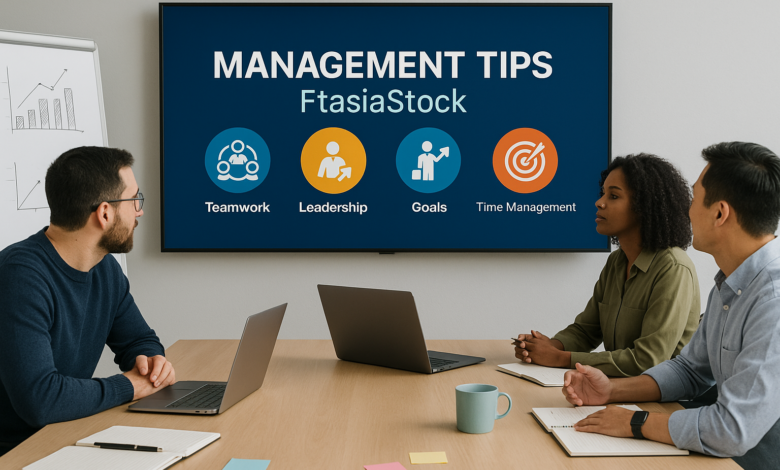
In today’s competitive digital economy, effective management is the backbone of every successful organization. Whether you run a startup, a mid-sized company, or a large enterprise, strong leadership and structured processes determine your long-term growth. This comprehensive guide explores practical and result-driven management tips ftasiastock businesses can implement to improve productivity, enhance team performance, and build sustainable success.
If you are looking for actionable strategies that combine leadership skills, operational efficiency, and modern business tools, this article provides everything you need in one place.
Understanding the Importance of Strategic Management
Strong management is not just about supervising employees. It is about aligning vision, strategy, resources, and people toward a shared goal. Businesses that fail to manage properly often struggle with confusion, low morale, and declining profits.
Effective management ensures clarity in roles and responsibilities. When employees understand expectations and performance standards, they work with greater confidence and efficiency. Clear communication reduces misunderstandings and prevents costly mistakes.
Another crucial factor is adaptability. Markets change rapidly, especially in technology and finance sectors. Organizations that follow structured management tips ftasiastock principles are better prepared to respond to market shifts, economic changes, and customer demands.
Additionally, strategic management improves resource allocation. Time, money, and talent must be invested wisely. Leaders who analyze performance data and monitor key metrics can make informed decisions that maximize returns.
Finally, good management strengthens company culture. When employees feel valued and supported, they are more likely to stay loyal and contribute creatively to business growth.
Leadership Skills That Drive Organizational Success
Leadership is at the heart of effective management. Even the most well-designed systems fail without strong guidance.
Building Clear Vision and Direction
A strong leader sets a clear and inspiring vision. Employees perform better when they understand the bigger picture and how their efforts contribute to company goals. Vision-driven leadership creates motivation and alignment.
Leaders should communicate objectives consistently. Regular meetings, progress updates, and performance reviews keep everyone on track. Transparency builds trust and reduces uncertainty.
When applying management tips ftasiastock, clarity in direction remains a fundamental principle. Clear goals eliminate confusion and encourage accountability across departments.
Vision should also be realistic and measurable. Setting achievable milestones helps teams track progress and celebrate small wins along the way.
Effective Communication and Active Listening
Communication is not only about speaking; it is also about listening. Managers must encourage open dialogue and feedback from employees.
Active listening helps leaders understand challenges and discover innovative ideas from team members. It builds respect and strengthens workplace relationships.
Clear communication reduces workplace conflict. Misunderstandings often arise from vague instructions or assumptions. Detailed explanations and written follow-ups ensure alignment.
Companies that adopt structured communication channels as part of management tips ftasiastock often experience higher employee satisfaction and improved workflow efficiency.
Time Management and Productivity Optimization
Time is one of the most valuable resources in business. Without proper planning, even skilled teams struggle to meet deadlines.
Setting Priorities and Eliminating Distractions
Managers must identify high-impact tasks and focus on them first. Using priority frameworks such as the Eisenhower Matrix helps distinguish urgent tasks from important ones.
Encouraging employees to minimize distractions significantly improves output. Clear work schedules, focused meeting agendas, and defined deadlines enhance productivity.
Delegation is another powerful tool. Managers should assign tasks based on strengths and expertise rather than trying to handle everything themselves.
By following management tips ftasiastock for time optimization, organizations can complete projects faster while maintaining quality standards.
Leveraging Technology for Efficiency
Digital tools simplify task management and communication. Project management software, collaboration platforms, and automation tools reduce manual effort and errors.
Automation improves consistency and saves time in repetitive processes such as reporting, scheduling, and data analysis.
Managers should regularly evaluate which tools improve efficiency and which create unnecessary complexity. The goal is to streamline operations, not overwhelm teams with excessive software.
Integrating modern technology into daily workflows reflects forward-thinking management practices that drive measurable growth.
Financial Management and Resource Allocation
Sound financial management is essential for long-term stability. Poor budgeting or uncontrolled expenses can quickly harm even profitable businesses.
Budget Planning and Cost Control
Creating a detailed budget helps managers monitor income and expenses accurately. Regular financial reviews identify overspending areas and potential savings opportunities.
Cost control does not mean cutting essential resources. Instead, it involves strategic spending that supports long-term objectives.
One of the most practical management tips ftasiastock approaches involves analyzing return on investment before approving new projects. Every expenditure should contribute measurable value.
Financial transparency also strengthens investor confidence and internal trust among stakeholders.
Risk Assessment and Strategic Investment
Every business faces risks, including market volatility, operational challenges, and regulatory changes. Managers must identify potential risks early and prepare mitigation strategies.
Diversification reduces financial vulnerability. Investing in multiple revenue streams protects the organization from sudden downturns.
Strategic investment decisions should rely on data rather than emotions. Market research and financial forecasting tools support informed planning.
By combining risk management with strategic investment, businesses maintain stability even during uncertain economic periods.
Building High-Performance Teams
A company’s success depends heavily on its people. Talent management is therefore a central element of effective leadership.
Hiring the Right Talent
Recruitment should focus not only on skills but also on cultural fit. Employees who align with company values integrate faster and contribute positively to team dynamics.
Clear job descriptions attract suitable candidates and reduce hiring mistakes. Structured interviews ensure objective evaluation.
Investing time in proper onboarding accelerates employee productivity. A smooth integration process sets the tone for long-term success.
Many organizations applying management tips ftasiastock prioritize structured hiring frameworks to build strong foundations.
Employee Development and Motivation
Continuous learning keeps employees competitive and confident. Offering training programs, workshops, and mentorship opportunities enhances professional growth.
Recognition and appreciation play vital roles in motivation. Employees who feel valued are more engaged and loyal.
Constructive feedback encourages improvement without discouraging morale. Managers should focus on solutions rather than blame.
A motivated workforce not only performs better but also contributes innovative ideas that drive business expansion.
Strategic Planning and Long-Term Growth
Short-term gains are important, but sustainable growth requires strategic planning.
Setting SMART Goals
SMART goals are specific, measurable, achievable, relevant, and time-bound. This structured approach improves clarity and accountability.
Managers should align departmental objectives with overall company vision. Consistency ensures unified progress.
Regular progress tracking allows timely adjustments. Waiting until the end of a project to review results often leads to missed opportunities for correction.
Incorporating structured planning into management tips ftasiastock strengthens organizational direction and performance tracking.
Monitoring Performance Metrics
Key performance indicators (KPIs) measure success objectively. These metrics vary depending on industry but often include revenue growth, customer retention, and productivity rates.
Data-driven decisions outperform assumptions. Managers should rely on reports and analytics rather than personal opinions.
Periodic evaluations ensure continuous improvement. Businesses that monitor progress consistently remain competitive and adaptable.
Customer-Centric Management Approach
Modern businesses thrive when they prioritize customer satisfaction.
Understanding Customer Needs
Market research and feedback surveys reveal valuable insights into customer expectations. Listening to clients helps businesses refine products and services.
Personalization enhances customer loyalty. Tailored experiences make customers feel valued and understood.
Strong customer relationships generate repeat business and positive word-of-mouth marketing.
Delivering Consistent Quality
Consistency builds trust. Companies must maintain high standards across products, services, and communication.
Quality control systems prevent defects and maintain brand reputation.
Responding quickly to complaints demonstrates responsibility and care. Effective issue resolution can transform dissatisfied customers into loyal supporters.
Applying customer-focused management tips ftasiastock strategies strengthens brand credibility and long-term profitability.
Innovation and Adaptability in Modern Management
Innovation keeps businesses relevant in evolving markets.
Encouraging Creative Thinking
Managers should create an environment where employees feel safe sharing ideas. Innovation thrives in supportive cultures.
Brainstorming sessions and cross-department collaboration generate fresh perspectives.
Allowing experimentation with controlled risk encourages growth and discovery.
Adapting to Market Trends
Businesses must stay informed about industry trends and technological advancements. Ignoring change often leads to stagnation.
Flexible planning enables quick adjustments. Rigid systems struggle during market disruptions.
Organizations that embrace innovation as part of management tips ftasiastock stay ahead of competitors and capture new opportunities.
Frequently Asked Questions (FAQs)
1. What are management tips ftasiastock and why are they important?
Management tips ftasiastock refer to structured leadership, operational, and financial strategies designed to improve business performance and sustainability. They help organizations enhance efficiency, profitability, and employee satisfaction.
2. How can managers improve team productivity?
Managers can improve productivity by setting clear goals, prioritizing tasks, minimizing distractions, using digital tools, and providing regular feedback and motivation.
3. Why is financial management critical for businesses?
Financial management ensures proper budgeting, cost control, risk assessment, and strategic investment. It protects the organization from losses and supports long-term growth.
4. How does leadership impact company success?
Strong leadership provides vision, direction, and motivation. Effective leaders communicate clearly, make informed decisions, and build trust within teams.
5. What role does innovation play in management?
Innovation allows businesses to adapt to market changes, improve products and services, and maintain competitive advantage.
6. How can businesses implement customer-centric management?
By understanding customer needs, delivering consistent quality, personalizing services, and responding quickly to feedback, businesses can strengthen loyalty and reputation.
7. What are the key elements of strategic planning?
Strategic planning includes setting SMART goals, aligning objectives, monitoring performance metrics, and making data-driven adjustments.
Conclusion
Effective management is a combination of leadership, strategy, financial discipline, team development, and customer focus. Businesses that apply structured and practical management tips ftasiastock approaches position themselves for sustainable growth and long-term stability.
By focusing on clear communication, time management, financial planning, innovation, and team empowerment, organizations can overcome challenges and thrive in competitive markets. Strong management is not a one-time effort; it is a continuous commitment to improvement, adaptability, and excellence.
